.png)

Last week, the global Enterprise Architecture community gathered at the Queen Elizabeth II Centre in London for The EA Practitioners Conference.

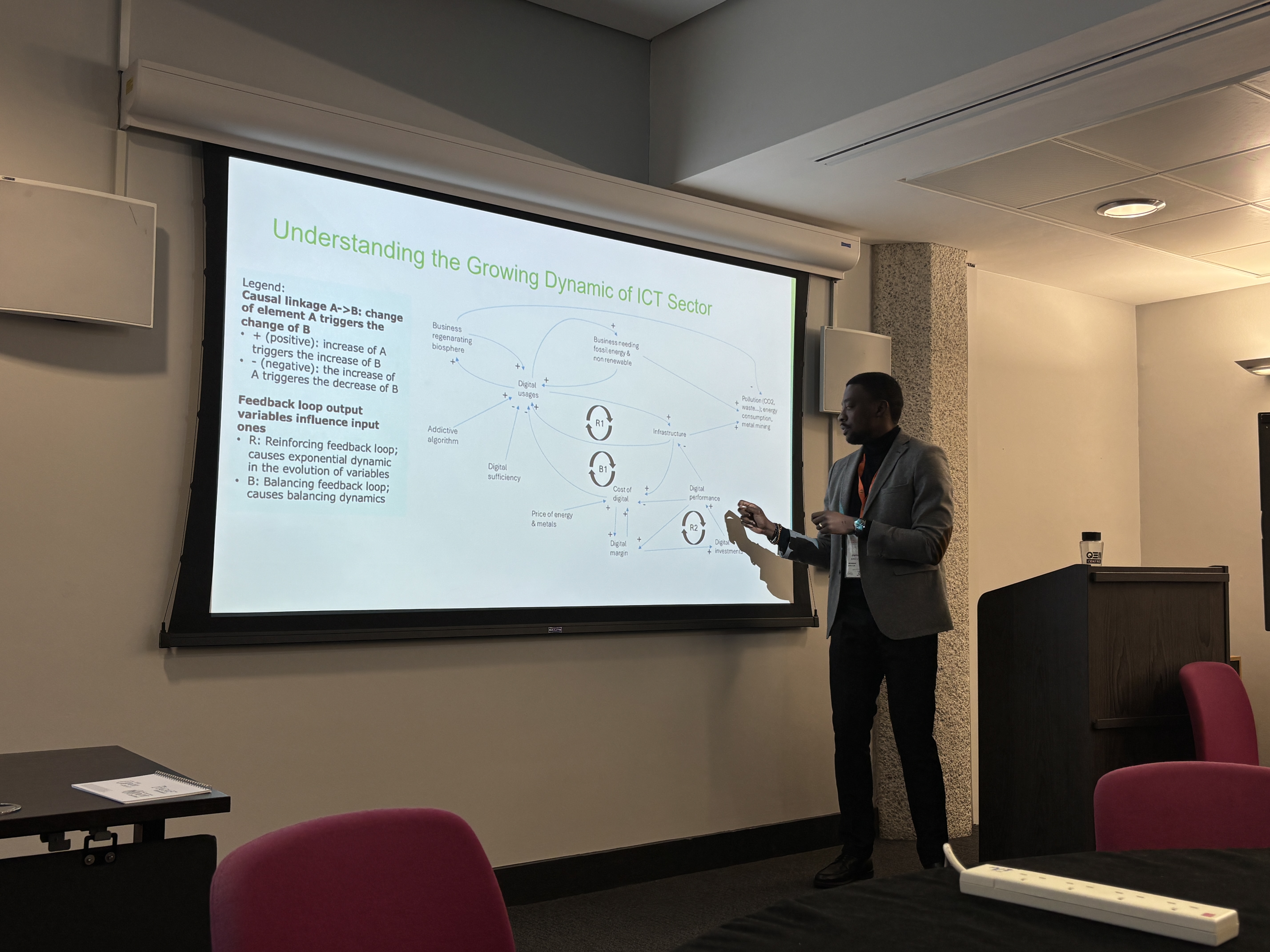
Organized by The Open Group from February 2nd to 4th, the event celebrated a major milestone: the 30th anniversary of the TOGAF® Standard. It was an inspiring few days of exchange in a historic venue. In addition to attending the main sessions, I had the privilege of leading a workshop on Digital Sustainability on Tuesday afternoon, joined by Celine Lescop , Andrew Josey, and Corinne Brouch.
Reflecting on the conference, I wanted to share three major takeaways regarding the future of our profession.
International Standards are More Necessary Than Ever
Today, the TOGAF® standard has more than 160,000 certified professionals across 170 countries. No other enterprise architecture standard has achieved such widespread adoption. As Judith Jones (the world’s first TOGAF-certified practitioner) explained, this is the result of relentless education and a collective realization that international standards are the backbone of global operations.
We live in a world of interconnected ecosystems. To address global challenges, such as the IT sectors carbon footprint, we need alignment across a vast chain of actors: from software vendors and hardware manufacturers to NGOs, universities, and governments. For these entities to communicate and operate fluidly, standardized data and methodologies are not just nice to have; they are essential.
Evolving from Technology Builders to Science-Based Advisors
The perception of IT professionals is shifting. We must move beyond being viewed simply as builders to becoming Science-Based Advisors.
This is particularly true regarding energy. As Sam Altman recently stated,
As datacenter production gets automated, the cost of intelligence should eventually converge to near the cost of electricity.
An information system driven by AI agents places energy efficiency and measurement at the center of the debate. As IT professionals, we bear the responsibility of interpreting the complex data coming from our servers to guide sustainable decisions.
EA as the Ultimate Governance Tool
The signals from the market are unmistakable. According to Forrester, the market for Enterprise Architecture tools has quadrupled since 2018, growing from $250 million to $1 billion. This growth underscores EA’s strategic role in "governing chaos".
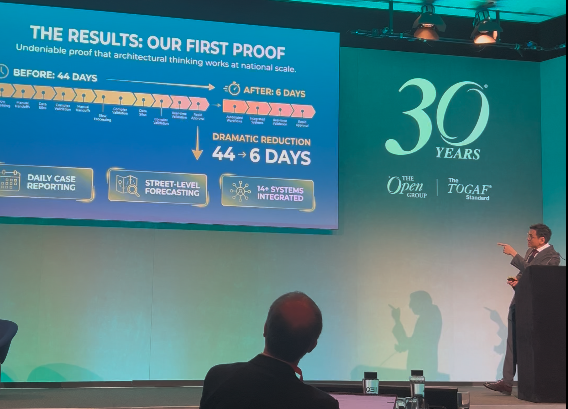
A compelling case study shared by Francis Uy, Msc at the conference illustrated this perfectly. During the COVID-19 pandemic, TOGAF methodologies were deployed to manage government initiatives in a time of crisis. The results were quantifiable and dramatic: by applying EA principles, the government’s response time to a detected outbreak was reduced from 44 days to just 6 days.
What comes next
Thirty years on, Enterprise Architecture remains not only relevant but critical. Implementing these frameworks via international standards is imperative if we are to find solutions to society's fundamental problems.

.jpeg)